 The Maryland Campaign of 1862, which climaxed in the battle of Antietam, was an important turning point in the Civil War. While Gettysburg is often referred to as the “high tide” of the Confederacy, the Maryland Campaign came at what may have been the true zenith of Southern success. Its failure represented a critical lost opportunity for its architect, Robert E. Lee, led to the issue of the Emancipation Proclamation, and thus ended any real hopes of European recognition or direct support of the Confederate cause. For the historian, meanwhile, it provides a marvelous opportunity to examine Lee as a strategist, to get inside his mind just a little, and see both his many strengths as well as his conspicuous weaknesses.
Lee’s concept for the campaign and his reasoning for its timing evolved from a series of Confederate successes in the East and his keen understanding of the need to quickly conclude the war before the South’s weaknesses in men and materiel could no longer be overcome. Lee assumed command of the Army of Northern Virginia from a severely wounded Joseph Johnson on June 1, 1862, and had pushed George McClellan and the Army of the Potomac away from the gates of Richmond and back down the Virginia Peninsula in the Seven Days Battles. With McClellan cowering on the James River, he then turned his energies toward John Pope and the newly formed Union Army of Virginia. He outmaneuvered Pope, baffled him completely, and then smashed his new army at Second Manassas. Driving Pope back into the defenses of Washington, by September 1, he found himself poised only 20 miles outside the Federal capital, but poised for what?
He had utterly demoralized both the Union armies of Pope and McClellan. The command situation in Washington was confused. McClellan and the Army of the Potomac had returned up Chesapeake from the Peninsula and McClellan had been relived of command. Lincoln was outraged that his patrician commander had not only squandered opportunities on the Peninsula, but also accused his administration of not supporting the army. McClellan had also been purposely tardy in returning to northern Virginia, where Pope badly needed his support. Thus, the time seemed ripe for action, but what action was called for? Lee felt that another major victory was needed, if not to destroy the Army of the Potomac, then certainly to destroy the will of the Northern people to continue to fight and end the war before the Confederacy’s disadvantages in manpower and resources were exposed.
This was especially true for political reasons that Lee also understood well. November would bring a new round of congressional elections in the North and another crushing defeat might spur the election of more anti-war Democrats to the Congress, who could press the Lincoln administration to pursue a peaceful end to the conflict. Additionally, President Davis was anxious to gain recognition and possibly direct military support from France and, especially, Great Britain. Yet another victory might bring that recognition one step closer to reality. Still, Lee was uncertain which way to move his army.
At the same time, Lee could see that his army was tired from a summer of fighting and badly in need of resupply, which northern Virginia, already stripped clean by Union forces, could not provide. He could retire south and take up positions on the far side of the Rappahannock River, which would allow him to rest, resupply, and reorganize his men. However, this would allow Union forces time to reorganize themselves and also might be seen by the enemy as admitting Lee and his army were incapable of sustained operations in the field. Worst of all, perhaps, it would mean surrendering the initiative Lee had fought so hard to retain all summer long. While Lee knew his army of 75,000 men was tired, he also knew that their morale was high and that they were flush with victory. Meanwhile, his opponents hid behind the Washington fortifications, demoralized from defeat and an uncertain command picture.
Lee knew he had to act and to do so with some speed, lest the advantage he now possessed slip from his fingers. He quickly examined his options and decided that a move into Maryland offered the best chance of success. He seems to have seen this as a grand “turning movement” and one whose primary effects would be political and psychological. For the first time, Confederate forces would cross into Northern soil, threatening not only Washington, but also Harrisburg, Baltimore, and Philadelphia. This would spread panic in the North and almost certainly demand that the Army of the Potomac move out from the fortifications around Washington, attempt to expel the invader from Maryland, and, most importantly, do so before it was prepared to fight.
Further, Lee could resupply his army off the ripe fields of Maryland, and, by drawing Union forces north, allow northern Virginia to recover. At the same time, Lee’s army could interrupt the movement of Union supplies along the Chesapeake and Ohio Canal as well as the vital Baltimore and Ohio Railroad. Further, Lee could retain the initiative, keep the enemy off balance, and force them to fight at a time and place of Lee’s choosing. Plus, a victory that occurred on Northern soil would not only be seen as further demonstrating the North’s impotence on the battlefield, but their inability to defend home ground might severely damage Union morale to the point that the war effort against the South could not be sustained.
Therefore, on the evening of September 2, only three days after his victory at Second Manassas, Lee issued orders to begin shifting the Army of Northern Virginia into Loudon County in preparation for a crossing of the Potomac River into Maryland. The next morning, he advised President Davis of his plans and the logic behind them via a dispatch, but, interestingly, he did not request permission or wait to receive any. On the morning of September 5, Stonewall Jackson’s corps splashed across the Potomac at White’s Ford north of Leesburg, Virginia, and the campaign into Maryland began.
 Even as the campaign was in its early hours, critical flaws in Lee’s plan began to emerge. The first of these was his intended lines of communication, which are the pathways and routes for not only communications with Richmond but also resupply of his army and a potential path for retreat, if the situation dictated. Lee realized that any lines of communication east of the Blue Ridge would not be viable, as Union forces from Washington could quickly move out to cut them. Instead, he decided that his lines of communication must run west of the Blue Ridge, through the Shenandoah Valley. This line, once securely established, would allow him to eventually move into western Maryland, thereby threatening Pennsylvania, and require that the responding Union army move further and further from its own base of supply, lengthening its own lines of communication and making them vulnerable to attack. However, the problem with establishing any lines of communication down the Shenandoah was the presence of a sizable Federal garrison of 12,000 men at Harper’s Ferry. Nevertheless, as the campaign began, Lee was unconcerned with Harper’s Ferry, as he was certain that, once the Army of Northern Virginia crossed into Maryland, that Union garrison would be forced to abandon its position, lest it become totally cut off and isolated. This meant that his plans relied upon a quick and timely evacuation of the Shenandoah Valley by Union forces.
 Map image used with permission by the Civil War Preservation Trust
As his army pressed northward, Lee was also relying upon Union forces to supply a commander who would move out quickly from Washington and oblige him by providing openings for a campaign of maneuver. Lee assumed this commander would be John Pope. He had already seen Pope’s inability to properly manage a large army firsthand and he was justifiably confident he could maneuver Pope into a position where he could be destroyed. However, this assumption demonstrates the first of a series of flaws in the intelligence Lee was receiving. Pope was in disgrace and George McClellan’s return to command was already being openly discussed in Washington. While Lee would have felt confidant fighting either Union general, it is interesting that he was unaware of these events and would continue to be so for several critical days. More compelling, however, is the fact that Lee’s plans were contingent on the preconceived behavior of the enemy. Any change in that behavior would be crucial to the success of the campaign and, therefore, any intelligence that indicated a change would be equally vital. As events would prove, that vital intelligence information on the Army of the Potomac would be found severely lacking.
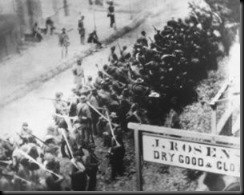 On September 6, Lee’s army successfully occupied Frederick, Maryland, some 50 miles north of Washington. He knew that, by now, the entire North was well aware of his army’s presence, and that was exactly the way he wanted it. He could safely assume that the telegraph wires were hot with news stories of the “invasion” and that Lincoln was being pressured to respond and do so quickly, which was, again, exactly what Lee wanted. The sooner the Union army began its pursuit, the better. What Lee did not know, however, was that McClellan was back in command of the Army of the Potomac and, cheered by the return of “Little Mac” as their leader, the morale of that army’s soldiers was quickly reviving.
 On the same day, Lee called a conference with his legendary cavalry commander, J.E.B (Jeb) Stuart. Lee had given considerable thought to the role of the cavalry in the campaign, which he saw as critical. Now that the Army of Northern Virginia was deep into Maryland, he informed Stuart hat he had a three-part assignment. The first was to both confuse the enemy as to where Lee’s army was headed and, at the same time, further agitate them to come forward for a fight. Therefore, Stuart was to divide his forces and send them in the direction of both Washington and Baltimore. Simultaneously, it was vital that Stuart screen the army from probes by Union cavalry so that their actual location and movements remain a mystery. Finally, and most importantly, Stuart was to reconnoiter and maintain a close watch on Federal forces. It was critical that Lee know the location, make-up, and speed of any Union advance.
Of all the events during the campaign, this meeting with Stuart was, in my opinion, the most critical, more important even than the lost copy of Special Orders (S.O.), No. 191, which we will examine later. The reason is that Stuart so utterly failed in accomplishing the third and most important part of his assignment. As a result, throughout the coming days, Lee would make decisions based upon intelligence from Stuart that was either incomplete or grossly inaccurate. Stuart was an able cavalryman so long, it seems, as the assignment fed his voracious ego. He was doing all he could to live up to the image of the dashing, daring cavalier and more pedestrian activities, such as collecting intelligence, apparently bored him. Instead, Stuart would indulge himself and his staff with lavish parties at the homes of Southern sympathizers while the Union army steadily approached. Little effort was made to conduct reconnaissance and the reports his men did produce were utterly inadequate.
What is perhaps most surprising about this failure, which nearly cost Lee his army, was that Stuart would be allowed to fail again the next summer during the Gettysburg campaign. Given wide latitude by Lee, he would abandon the army and, instead of monitoring the approaching Army of the Potomac, make a ride around Washington, collecting numerous headlines along the way. The result was that, deep in enemy territory, Lee had no eyes and ears, and he eventually wandered blindly into the Union army at Gettysburg. Had he honestly evaluated Stuart’s performance in Maryland, and confronted him with its results, perhaps Stuart would not have repeated the offense. But, Lee was loath to confront anyone and he hated any disharmony with his staff. He may have realized that Stuart failed him in Maryland, but, if he did so, he made no mention of it, and he certainly did not learn from the experience.
On September 7 and 8, Lee waited in Frederick for news of the garrison at Harper’s Ferry and any Federal advance from Washington. He remained confident that the former must have been evacuated by now and merely needed confirmation of that fact. In a dispatch to Jefferson Davis, he commented that, apparently, the enemy was still not advancing towards him. In actuality, McClellan already had advanced some 60,000 men 12 miles north of Washington in an arc designed to cover any Confederate move towards either the capital or Baltimore, and more troops were following. However, the next day, Lee would learn that Federal troops were on the move. But, for some reason, based on Stuart’s reports, he assumed that the 12 miles they had covered had been traveled since learning of Lee’s movements on September 4. In actuality, they had covered that distance in a single day, and were still steadily advancing. Further, from his dispatches, it is clear that he did not have a clear picture of the organization of the army that was advancing nor was he aware that George McClellan was again in command. As a result, Lee remained quietly confident that he and his army were in no immediate danger.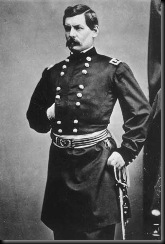
But, September 9 did bring news that the Union garrison at Harper’s Ferry remained stubbornly in-place. Lee had been contemplating a move west towards Hagerstown, hoping that would be enough to stir the enemy to abandon the town, but now he became convinced that something more direct and more drastic was required. In a Council of War held late that afternoon, Lee announced that he was going to divide the army and send Stonewall Jackson at the head of a column to force the Federals out of Harper’s Ferry. His hope was that the mere news of Jackson’s approach would be enough to cause an evacuation, or that, at the least, the arrival of such overwhelming force would create an instantaneous capitulation. At worst, the entire operation should only take a few days, after which Jackson would rejoin the remainder of the army west of the Catoctin Mountains. Given the perceived slow and cautious advance of the Army of the Potomac, there should have been plenty of time. In fact, given Lee’s calculations of the Federal rate of advance, he should be able to complete the entire Maryland Campaign before Union forces even reached Frederick.
Both Longstreet and Jackson opposed Lee’s plan. Dividing the army while deep inside enemy territory was risking disaster in their minds, and it violated every common sense rule of operations. Further, the success of the plan required that Harper’s Ferry be dealt with quickly and easily and that the Army of the Potomac continue to advance at a snail’s pace. Both assumptions would soon prove to be totally incorrect.
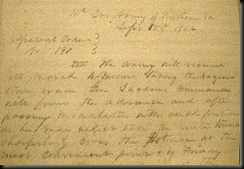 The plan was written down in what was titled as S.O. No. 191. Seven copies were made, with one addressed to President Davis, while the others went to key commanders. The orders provided details on both the planned movement and the schedule. Surprisingly, Lee stated a deadline of September 12 for the capture of Harper’s Ferry—only three days away. The expeditionary force bound for Harper’s Ferry would total 38,000 men, leaving the main body with Lee at approximately 28,000 men. Meanwhile, the Army of the Potomac continued moving forward and, as Lee sent out S.O. No. 191, the advance elements of McClellan’s army were only 10 miles from Frederick. Little did Lee realize that the initiative was steadily slipping from his grasp.
On September 10, Lee’s divided army began to move, with Jackson and McLaws heading towards Harper’s Ferry, while Lee and the main body moved west over South Mountain to Boonsboro. Once there, Lee ordered Longstreet to continue west to Hagerstown. On the 11th, Lee heard from Stuart that the cavalry would be forced to retire from Frederick the next day. Lee seems to have assumed that this was because of the arrival of Union cavalry, but, in fact, the forces Stuart observed advancing were actually a division of the Union IX Corps. On the 12th, those Union troops would occupy Frederick and Lee would learn that the Harper’s Ferry garrison was stubbornly refusing to leave. His timetable was not proceeding as planned, which upset him, but not nearly as much as the news he received the next day informing him that Frederick had not merely been occupied by cavalry, but, rather, the town was now host to a large force of Union infantry.
Still, Lee did not panic and was not overly concerned by this turn of events. He was worried that the slowness of the effort to secure Harper’s Ferry might endanger Jackson’s force if it took much longer to complete, but, due to continuing faulty intelligence from Stuart, he had yet to realize the size and proximity of the Army of the Potomac. However, by the time the evening of September 13 was over, Lee would find his entire plan seemed to be collapsing about him. First, he was informed that Union infantry were not just in Frederick but that they had moved west and were already approaching the passes over South Mountain. Prior to this time, Lee had not planned to defend the passes and intended to allow the Union army to come forward unmolested. However, he never anticipated them being so perilously close while his army was divided. Now, he would be forced to defend the passes and try to slow their advance. But, no sooner had he dispatched units to defend the passes than he learned that George McClellan had a copy of S.O. No. 191, which had apparently been carelessly dropped only to be found by a Union soldier after the occupation of Frederick. McClellan now knew that Lee had divided the army and was at that very moment pushing his entire army to the passes over South Mountain in an attempt to catch Lee before he could reunite the Army of Northern Virginia.
Lee now must have fully realized that he had lost the initiative. He realized the campaign and his entire army was in danger. Still, he did not panic and he seems to have been determined to find a way to regain the initiative and salvage the campaign—too much was riding on its success to do otherwise. Lee’s analysis told him that McClellan would most likely move to relief Harper’s Ferry, which was in error. His plan was to mount a vigorous defense of the passes over South Mountain and hold McClellan at bay until Harper’s Ferry had surrendered. Then, he would reunite his army at Sharpsburg on the northern banks of the Potomac and proceed onward to Hagerstown, still free to maneuver until he could get the Army of the Potomac where he wanted them.
 However, the defense of the passes on September 14 did not go as Lee hoped. There were five passes to defend, four of them within a five-mile front. And McClellan wisely decided to focus his attention on one, while attacking the others solely to hold Confederate forces in place. By evening, the passes had been forced, and Lee would state, “The day has gone against us.” Lee now faced a new reality and it was one of total disaster. He immediately ordered the army to move south to Sharpsburg and retreat across the Potomac into Virginia. He sent a dispatch to Jackson telling him to abandon operations against Harper’s Ferry and to move to Sheperdstown, opposite Sharpsburg, so that he could cover the Potomac crossing.
Early the next morning, Lee arrived in Sharpsburg in preparation to move across the Potomac. However, as Lee was enjoying a cup of coffee, a dispatch rider arrived from Harper’s Ferry with a message from Jackson. The message told Lee that his corps commander expected the Union garrison to fall later that day. Suddenly, Lee saw a new opportunity. If he could make a defensive stand at Sharpsburg until Jackson and McLaws could join him, he might then extract himself, move toward Hagerstown, and regain the initiative. He issued orders to both men to join him in Sharpsburg as quickly as they had completed the operation at Harper’s Ferry and set about standing up defensive positions on the hills outside of town.
With his back to the river, Lee did not have the best of positions, and he did not have enough resources to close his flanks against the banks of the river. Further, in a more general sense, Lee’s decision to regain the initiative ignored an important reality: the condition of his army. His men had been marching almost constantly since September 4, and the losses experienced defending South Mountain were greater than he probably realized. Fatigue and casualties had taken a toll. But Lee refused to see that. He had apparently begun to develop a sense, even a dangerous belief, that his army could do anything he asked of it.
On September 16, Lee hoped that Jackson would join him soon enough to allow the army to move west before it was confronted by the bulk of McClellan’s army. However, by the time Jackson arrived and took up positions on Lee’s defensive line, the Army of the Potomac arrived in full force. Lee would now be forced to give battle, and his last real chance to maneuver, to regain the initiative, was lost.
 I will not spend a great deal of time discussing the Battle of Antietam, itself, except to touch on a few points. McClellan’s plan of attack was to pound at Lee’s flanks until one weakened sufficiently that Lee would have to shift forces from the center of his line. When that occurred, McClellan would exploit the now weakened center to break Lee’s army in two. As a result, throughout the morning, Union forces hammered at Lee’s left flank, making repeated assaults on Jackson’s corps. One thing about these attacks that has always puzzled me was the lack of Confederate field fortifications and the resulting use of bloody counterattacks. Lee would later become a master at quickly erecting field fortifications and allowing Federal assaults to break upon them. But, here, there were no such fortifications. Instead, Lee’s men countered Union attacks with assaults of their own, steadily bleeding themselves white, leading to a staggering overall casualty rate of 31 percent.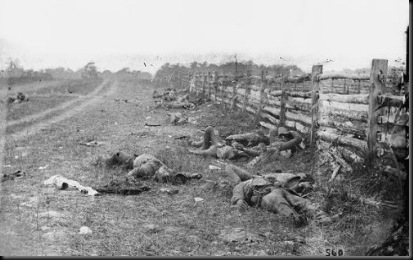
Later in the day, Lee experienced two near-disasters and two strokes of luck. With his center weakened, just as McClellan desired, Federal forces overran Confederate units at the Sunken Road, exposing Lee’s entire center. But, rather than commit his reserves to break Lee in two, the always timid McClellan held back. And, in late afternoon, when Burnside’s corps had forced the lower bridge over Antietam Creek and was rolling up Lee’s right flank, the last of Jackson’s corps under A.P. Hill would arrive on the field and blunt the Union attack. As with any great general, Lee was saved by a generous portion of luck in the form of an overly cautious opponent who became so at just the right moment and good timing by A.P. Hill.
The next day, both armies remained in place, cautiously eyeing one another. For his part, Lee was trying to find a way to break out and continue to maneuver in the direction of Hagerstown. He presented several plans, but his staff convinced him that none were viable given the condition of the army. Finally, he ordered the army to move across the Potomac that night. Many analysts have seen this simply as Lee’s decision to retreat back to Virginia and end the Maryland Campaign. However, that is not the case or, at least, it was not so in Lee’s mind when he issued the order. Lee planned to simply change his base by moving to the south bank of the river, and then go upriver to Williamsport, where he would re-cross the Potomac and, once again, enter Maryland with the initiative restored. At this point, Lee’s desire to continue the campaign was bordering on an obsession.
Lee would actually send cavalry towards Williamsport to ensure the ford was not defended, with infantry close behind. But before he could shift the army, his senior commanders prevailed upon him and convinced him that his army was too tired, too demoralized, and too beat up to continue the campaign. On September 21, he would begin moving the army back to the banks of the Rappahannock for rest and resupply. The Maryland Campaign was at an end.
Robert E. Lee’s reasons for executing the Maryland Campaign demonstrated a sound and keen understanding of the strategic situation facing the Confederacy and his initial plan was audacious and bold, but not to the point of being overly fraught with risk. However, he made the mistake of assuming that his enemy would keep to playing their role in the “script” as Lee had written it. Despite it being against all traditional military thinking, the Union commander at Harper’s Ferry would not leave, forcing Lee to take the risk of dividing his army. Worst of all, however, was the speed at which George McClellan restored the morale of his army and moved forward to confront Lee. Here, Lee was plagued by bad intelligence and the failures of Jeb Stuart. However, Lee was guilty of accepting this intelligence at face value simply because it fit the plan he had so carefully crafted. As a result, he had lost the precious initiative he valued so highly long before anyone placed a copy of S.O. No. 191 in McClellan’s hands. However, perhaps worst of all, Lee would learn little from his experience in Maryland and he would move into Pennsylvania during the summer of 1863 with a reliance on Jeb Stuart and an unshakable belief that, once again, the Army of the Potomac would remain demoralized, as was its part in his script.


 Posts
Posts


